


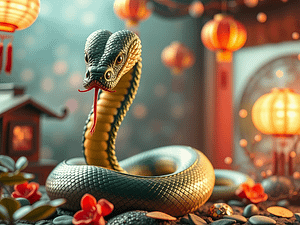
When we think of the Lunar New Year, we often think of the Chinese New Year where each year is represented by an animal. There are 12 animals repeating every 12th year: 2025 is the Year of the Snake.
The 12 Animals
Rat
Ox
Tiger
Rabbit
Dragon
Snake
Horse
Goat (or Sheep)
Monkey
Rooster
Dog
Pig (or Boar)
Many Asian countries celebrate the Lunar New Year. (see below) While the precise origins are shrouded in ancient history, here’s a possible explanation for why Lunar New Year is tied to the winter solstice that occurs on or around December 21st of each year:
- Agricultural Significance:
- In agrarian societies, the winter solstice marked the end of the harvest season. It also signaled the beginning of a period of rest and renewal.
- It was a time to reflect on the past year and prepare for the upcoming growing season.
- By aligning Lunar New Year with the winter solstice, it became a time to celebrate the completion of the agricultural cycle and to welcome the return of spring and the promise of new growth.
- Symbolic Significance:
- The winter solstice represents the darkest time of the year, symbolizing the end of an old cycle and the beginning of a new one.
- Just as the days begin to grow longer after the winter solstice, Lunar New Year symbolizes hope, renewal, and the promise of a brighter future.
How The Date For The Lunar New Year Is Configured
- Lunisolar Calendar: This calendar combines elements of both the lunar cycle (the phases of the moon) and the solar cycle (the Earth’s orbit around the sun).
- New Moon: Lunar New Year traditionally falls on the second new moon after the winter solstice.
- Winter Solstice: The winter solstice is the shortest day of the year in the Northern Hemisphere, marking the official beginning of winter.
Therefore, Lunar New Year typically falls between late January and mid-February. The exact date varies each year because the lunar and solar cycles.
The Asian Countries That Celebrate The Lunar New Year
- China: As the origin of Lunar New Year, it’s the most widely and extensively celebrated in China.
- South Korea: Known as Seollal, it’s a major holiday with traditions like bowing to elders, wearing traditional hanbok clothing, and enjoying special foods like tteokguk (rice cake soup).
- Vietnam: Called Tết, it’s a time for family gatherings, elaborate decorations, and enjoying special foods like bánh chưng (sticky rice cakes) and xôi (glutinous rice).
- Singapore: A multi-cultural nation, Singapore celebrates Lunar New Year with a vibrant blend of Chinese, Malay, and Indian traditions, including lion dances, festive decorations, and delicious food.
- Malaysia: A multi-ethnic country, Malaysia celebrates Lunar New Year with a unique blend of Chinese, Malay, and Indian influences.
- Indonesia: In some parts of Indonesia, particularly those with significant Chinese communities, Lunar New Year is celebrated with festive decorations, lion dances, and special foods.
How People Celebrate Lunar New Year
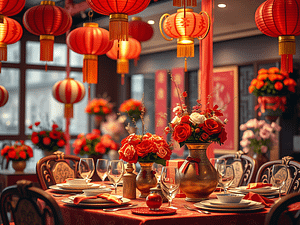
Lunar New Year is a time for families to come together, honor ancestors, and welcome the new year with hope and joy. Celebrations often last for 15 days, culminating in the Lantern Festival. Here are some key traditions:
- Family Reunion Dinner: The most important tradition is the reunion dinner on New Year’s Eve. Families gather to enjoy a lavish meal, symbolizing unity and togetherness.
- House Cleaning: Before the new year arrives, houses are thoroughly cleaned to sweep away bad luck and make way for good fortune.
- Decorations: Homes are adorned with red lanterns, paper cuttings, and couplets with auspicious wishes for the new year. Red is the dominant color, symbolizing happiness and good luck.
- Red Envelopes (Hongbao): Elders give red envelopes filled with money to children and unmarried adults as a symbol of good luck and prosperity.
- Firecrackers and Fireworks: Setting off firecrackers and fireworks is a way to ward off evil spirits and welcome the new year with a bang.
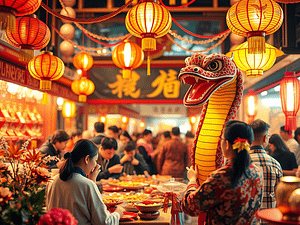
- Lion and Dragon Dances: These traditional dances are performed in streets and at festivals to bring good luck and ward off bad spirits.
- Visiting Relatives and Friends: People visit relatives and friends to exchange greetings and blessings for the new year.
- Temple Visits: Many people visit temples to pray for good fortune and offer thanks for the past year.
- New Clothes: Wearing new clothes symbolizes a fresh start and a new beginning.
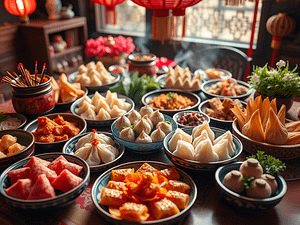
- Food: Food plays a central role in Lunar New Year celebrations. Symbolic dishes like dumplings, fish, and noodles are enjoyed to bring good luck and prosperity.
Popular And Significant Foods Linked To The Lunar New Year
- Dumplings (Jiaozi):
- Shaped like ancient Chinese ingots, symbolizing wealth and prosperity.
- Often filled with pork, shrimp, or vegetables.
- Fish (Yu):
- Symbolizes abundance and prosperity.
- Often served whole, signifying a complete and prosperous year.
- Noodles (Changshou Mian):
- Long noodles symbolize longevity and a long life.
- Spring Rolls (Chun Juan):
- Resemble gold bars, symbolizing wealth and prosperity.
- Sweet Rice Balls (Tang Yuan):
- Represent family unity and harmony.
- Citrus Fruits:
- Oranges and tangerines symbolize good luck and abundance.
May the Year of the Snake bring joy and good fortune to you and your loved ones!
If you like what you see please Like, Share, and Subscribe. Thank You!
Please Pass It On!

Discover more from The Janny Bee
Subscribe to get the latest posts sent to your email.