


Have you ever stared into your fridge, bypassed three different kinds of milk, grabbed a prewashed bag of organic salad greens, and thought, “How did we get here?”
It’s easy to take our air fryers, grocery delivery apps, and daily avocado toast for granted. But if you could hop into a culinary time machine and travel back to the birth of our nation, you wouldn’t just be missing your microwave – you’d be staring down an open fire, a massive iron pot, and a diet consisting heavily of corn mush.
To celebrate how far the American kitchen has come, we are taking a delicious trip down memory lane. Every 50 years, the way we cook, eat, and think about health undergoes a massive transformation.
We’re breaking down the ultimate American food timeline in 50-year increments, starting all the way back in 1776 and traveling all the way to 2026. Along the way, we’ll look at what the average family was putting on the table, the jaw-dropping evolution of grocery prices, and the bizarre health fads each generation fell for (spoiler alert: we’ve been falling for weird diet trends for centuries!).
So, grab your favorite beverage, pull up a chair, and let’s see what’s been for dinner over the last 250 years. First stop: 1776!
1776: The Revolutionary Hearth

In the year of America’s founding, eating was strictly seasonal, local, and incredibly labor-intensive. Most meals were prepared over an open fire in a single iron pot.
- The Diet: Corn was the absolute king. Hoecakes and johnnycakes were unleavened flat breads made from corn meal. Porridge or corn meal mush was often eaten for breakfast. Alongside hoecakes or johnnycakes, salted pork, wild game, root vegetables, and seasonal stews were the common fare for dinner.
- The Drink: Water was often unsafe, so everyone – including children – drank hard cider, ale, or watered-down whiskey. The alcohol would kill the bacteria in the water. Because of the Boston Tea Party, drinking tea was considered unpatriotic, causing a massive surge in coffee consumption.
- Health Fad: There were no “diets” yet, but the prevailing medical wisdom was the “Theory of Humors.” People believed food needed to balance bodily fluids (blood, phlegm, black bile, yellow bile). Tomatoes were widely feared and avoided because people thought they were poisonous!
- Average Prices:
- Pound of Beef: – 4 cents
- Gallon of Milk: – 6 cents
- Dozen Eggs – 8 cents
- Pound of Butter – 7 cents
- Gallon of Whiskey – between 25 and 50 cents
1826: The Age of Abundance & Alcohol

By the 50th anniversary of the nation, canals and early railroads allowed food to move further, and the American diet became notoriously heavy.
- The Diet: This era was famously dubbed the “Age of Gluttony.” Americans ate massive amounts of meat (especially pork) three times a day. Meals were heavy, greasy, and lacked fresh vegetables.
- The Drink: Water was still iffy. Americans drank more alcohol in 1826 than they do today.
- Health Fad: The Graham Diet. Sylvester Graham (the father of the Graham cracker) introduced America’s first major health craze. Horrified by the nation’s heavy meat and alcohol intake, he advocated for strict vegetarianism, whole grains (Graham flour), cold baths or showers, and bland foods to suppress “carnal desires.”
- Average Prices:
- Pound of Pork: – 5 cents
- Gallon of Milk – 16 cents
- Dozen Eggs – 14 cents
- Pound of Butter – 11 cents
- Loaf of Bread – 4 cents
- Gallon of Whiskey – 25 cents
1876: The Industrialized Plate

During America’s centennial, the Industrial Revolution was changing the kitchen. The invention of commercial canning, rolling mills for white flour, and early refrigerated rail cars meant food could be processed and shipped across the country.
- The Diet: White bread became a status symbol, and the first iconic American brands began to emerge (like Heinz Ketchup). For the urban middle class, elaborate multi-course meals featuring roasts, gelatin molds, and oysters were all the rage.
- The Drink: Water was still not considered safe. Alcohol was still fashionable. With wine consumption on the rise.
- Health Fad: Sanitarium Culture. Dr. John Harvey Kellogg took over the Battle Creek Sanitarium around this time. He promoted “biologic living,” which focused on high-fiber grains, yogurt enemas, and total abstinence from alcohol and caffeine. He invented cornflakes as a bland health food to curb unhealthy impulses.
- Average Prices:
- Pound of Butter: ~24 cents
- Dozen Eggs ~20 cents
- Gallon of Milk – 35 cents
- Pound of Beef – 12 cents
- Gallon of Whiskey – $1.00 to $4.00
1926: The Modern Kitchen

By 1926, the widespread availability of home electricity, gas stoves, and early refrigerators changed everything. Fast, convenient, and standardized foods became the new norm.
- The Diet: Sliced bread, Wheaties, and canned soups were staples. The 1920s saw a massive boom in sweet treats, with the invention of the Baby Ruth candy bar, Wonder Bread, and a nationwide obsession with ice cream parlors (fueled partly by Prohibition shutting down bars).
- The Drink: Water was much safer now with water purification plants popping up in the larger cities. Alcohol was still booming even though prohibition was in place.
- Health Fad: The Cigarette & Grapefruit Diet. For the first time, fashion trends emphasized a very thin, boyish silhouette for women. The “Reach for a Lucky instead of a sweet” advertising campaign promoted smoking as a weight-loss tool, often paired with eating half a grapefruit before every meal to “burn fat.”
- Average Prices:
- Gallon of Milk – 56 cents
- Pound of Better – 54 cents
- Dozen Eggs – 40 cents
- Loaf of Bread – 9 cents
- Pound of Round Steak – 36 cents
- Gallon of Bootleg Whiskey – $6 to $20
1976: The Convenience Boom
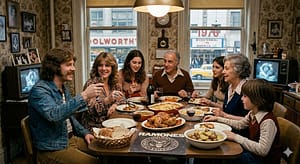
America’s Bicentennial marked the peak era of processed, packaged, and fast foods. Women were entering the workforce in record numbers, and the food industry adapted to prioritize speed and convenience over everything else.
- The Diet: TV dinners, Hamburger Helper, Jell-O salads, processed cheese (like Velveeta), and fast food chains like McDonald’s were regular parts of the weekly routine. High-fructose corn syrup was introduced to the food supply, drastically sweetening sodas and baked goods.
- The Drink: KoolAid, diet soda, and beer were everywhere.
- Health Fad: The Low-Fat/High-Carb Craze. The government released early dietary guidelines warning against cholesterol and saturated fat. This triggered a massive wave of “diet” foods where fat was stripped out and replaced with sugar. The Scarsdale Diet (high protein, low calorie) and the Liquid Protein Diet were also wildly popular.
- Average Prices:
- Gallon of Milk – $1.68
- Dozen Eggs – 84 cents
- Pound of Butter – $1.00
- Loaf of Bread – 35 cents
- 6 Pack of Beer – $2.60
2026: The Fragmented Digital Plate

Today, our diet is defined by hyper-convenience, global flavors, and complete polarization. We have instant access to ultra-processed fast food in one aisle, and clean-label, organic superfoods in the next.
- The Diet: Fast-casual bowls (like Chipotle), avocado toast, plant-based meat alternatives, oat milk, and seltzer waters (like LaCroix). Food delivery apps mean restaurant meals arrive at our doors in 30 minutes, while meal kits (like HelloFresh) make home cooking structured and pre-measured.
- The Drink: Sales of regular and diet soda are going down. As is sales of beer. Wine is taking over the alcohol market. Many people are choosing plant based milks over cows milk. Oat, rice, and soy milk are everywhere. Even in our coffee.
- Health Fad: Gut Health, Intermittent Fasting, and GLP-1 Foods. While Keto and Paleo are still around, the biggest focus right now is on gut microbiomes (fermented foods, kombucha, prebiotic sodas) and structured eating windows. Additionally, the massive popularity of weight-loss medications has shifted the industry toward high-protein, companion foods designed for smaller appetites.
- Average Prices:
- Gallon of Milk – $4.00
- Pound of Butter – $4.30
- Dozen Eggs – $3.00 to $4.50 (highly variable)
- Loaf of Bread – $3.50
- Pound of Steak – $13.00
The Evolution of the Plate: Where Do We Go From Here?

Looking back at the last 250 years, it’s clear that the American dinner table is so much more than just a place to eat—it’s a mirror reflecting our history, technology, and cultural shifts.
We’ve journeyed from an era of absolute necessity in 1776, where a family’s survival depended on the grueling daily labor of hearth cooking, to an era of hyper-convenience in 2026, where a fully prepared, organic meal can be summoned to our doorstep with a few taps on a smartphone screen.
As our lives sped up, our food kept pace. We traded the grueling physical labor of the 18th and 19th centuries for the convenience of 20th-century factory canning and frozen TV dinners. And along the way, our anxieties shifted completely. Our ancestors worried about whether they had stored enough salted pork to survive a long winter; today, we worry about whether our breakfast cereal has too many artificial ingredients or if our morning latte should be made with oat milk instead of dairy.
If history has taught us anything, it’s that our collective obsession with food trends, rising prices, and bizarre health fads isn’t a modern invention; it’s a grand American tradition! Whether it’s swapping tea for coffee to be patriotic, eating bland crackers to save your soul, or sipping prebiotic sodas for gut health, we are always searching for the next best thing to put on our plates.
So, the next time you go to cook a quick meal, take a look at your modern kitchen and give a little nod of appreciation to the centuries of changes that brought us here. And ponder what it’ll be like in 2076.
If you enjoyed what you read, please like, share, follow, and subscribe.
Thank You! And, Happy 250th Birthday to the U.S.A.!
Click the button below to get a recipe for each time period.

Please Pass It On!

Discover more from The Janny Bee
Subscribe to get the latest posts sent to your email.
One thought on “Hoecakes to Oat Milk: 250 Years of the American Plate, Cup & Wallet”