
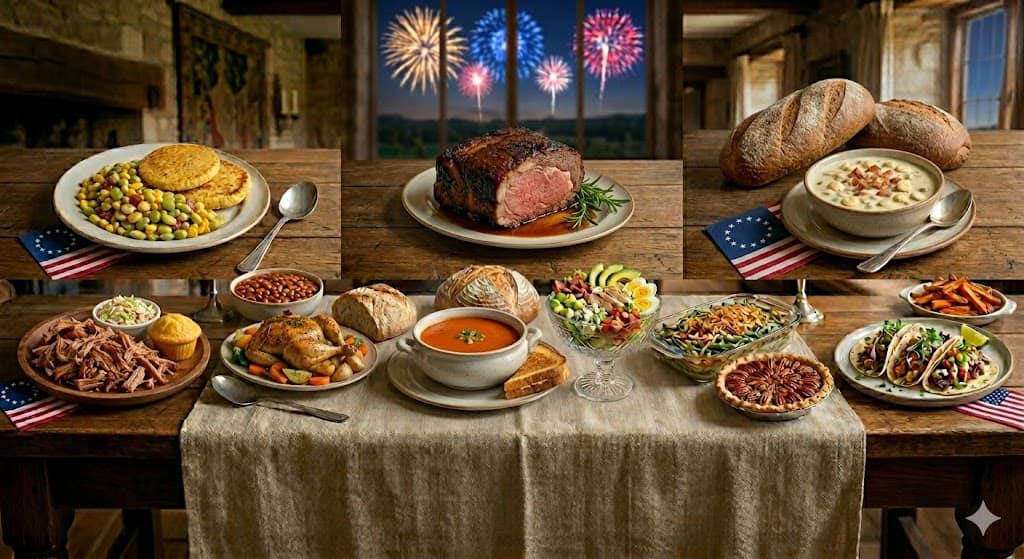
If reading about the changing American plate has made you hungry, you’re in luck. To truly understand how our ancestors lived, ate, and budgeted, there is no better way than to recreate the actual dishes that graced their tables.
From the rustic hearths of the Revolution to the plant-based kitchens of today, here is a popular recipe from each 50-year milestone of our journey—complete with a look at what the ingredients meant for the wallet of the era.
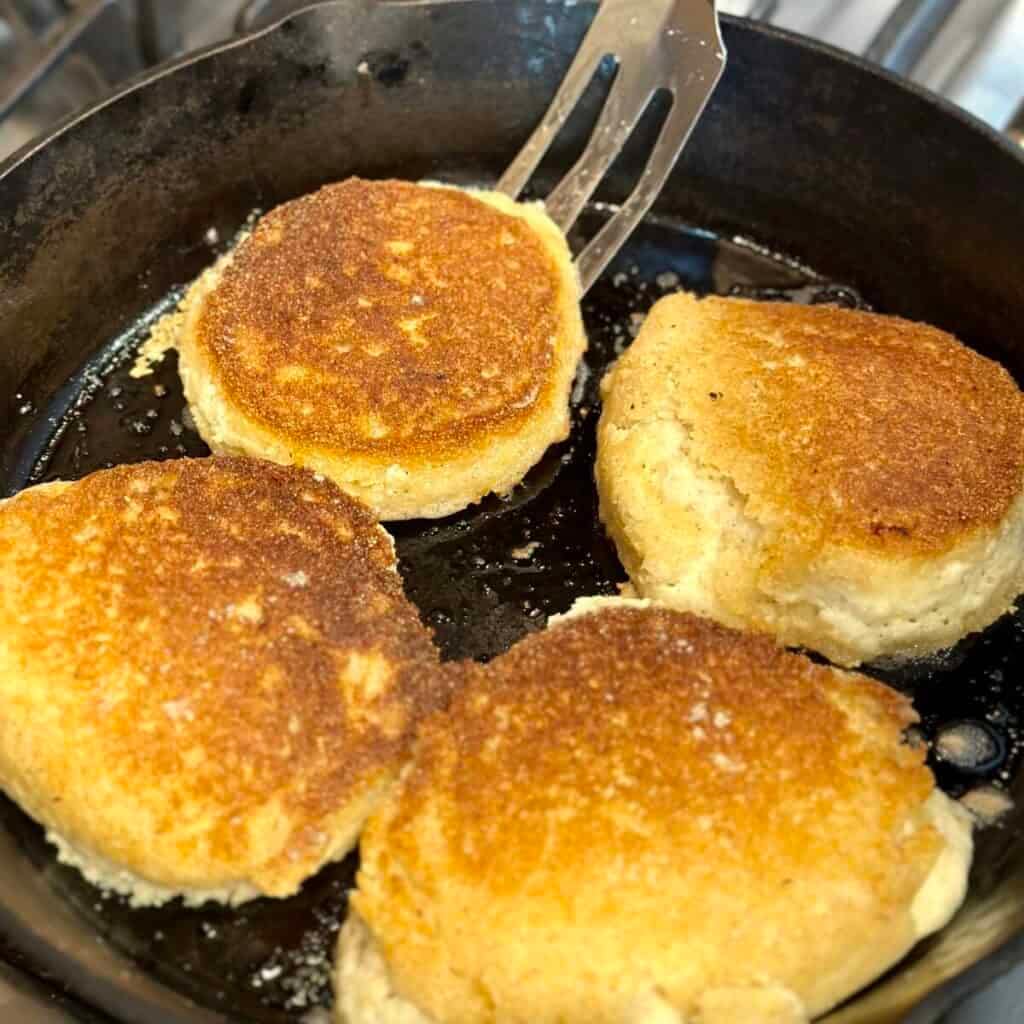
1776: The Revolutionary Hoecake
Before it was a country, America ran on corn. Wheat flour was heavily taxed and often exported, making cornmeal the true backbone of the early American diet. Hoecakes—simple cornmeal patties baked over an open fire (traditionally on the flat blade of a garden hoe)—were eaten by everyone from enslaved laborers to George Washington himself.
- The 1776 Wallet: Incredibly cheap. Corn was plentiful and grown locally, requiring only water and a pinch of salt.
- The Cup Pairing: Hard apple cider or small beer.
Ingredients:
- 1 cup stone-ground yellow cornmeal
- 1/2 teaspoon salt
- 3/4 cup boiling water
- 1 tablespoon lard, bacon grease, or butter (for frying)
Instructions:
- Mix the cornmeal and salt together in a bowl.
- Pour the boiling water over the mixture, stirring constantly until it forms a thick, damp dough. Let it sit for 5 minutes to absorb the liquid.
- Melt your fat of choice in a heavy skillet (cast iron is best!) over medium heat.
- Form the dough into small, flat patties (about 3 inches wide).
- Fry for 4 to 5 minutes on each side until a golden-brown, crispy crust forms. Serve hot with a smear of butter or a drizzle of molasses, honey, or maple syrup.
- Hoecakes are wonderful served with soup or chili. Dipped in or crumbled on top.
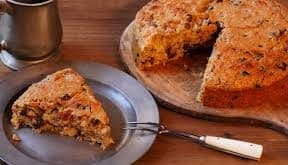
1826: Amelia Simmons’ Election Cake
By 1826, the young nation was celebrating its 50th birthday, and “Election Day” was a massive public holiday. People traveled from all over to vote, and towns celebrated with “Election Cake”—a heavily spiced, yeast-risen fruitcake. This recipe is adapted from American Cookery by Amelia Simmons, the very first American cookbook. Published in 1796.
- The 1826 Wallet: Mid-tier. Spices (nutmeg, mace) and refined sugar were still imported luxuries, making this a “special occasion” cake that communities would pool resources to bake in massive quantities.
- The Cup Pairing: Madeira wine or a spiced rum punch.
Ingredients:
- 1 package (2 1/4 tsp) active dry yeast
- 1/2 cup warm milk
- 3 1/2 cups all-purpose flour (divided)
- 1/2 cup butter, softened
- 3/4 cup brown sugar
- 2 eggs
- 1 teaspoon ground nutmeg
- 1/2 teaspoon ground mace or cinnamon
- 1 cup raisins or dried currants
Instructions:
- Dissolve the yeast in warm milk, then stir in 1 cup of the flour to make a soft dough (the “sponge”). Cover and let rise for 1 hour.
- Cream the butter and sugar together, then beat in the eggs one at a time.
- Add the spices and the remaining 2 1/2 cups of flour to the butter mixture, then stir in the risen yeast sponge.
- Fold in the raisins. Pour the batter into a greased bundt or loaf pan.
- Cover and let rise a second time for about 1.5 hours.
- Bake at 350°F (175°C) for 40–45 minutes until a toothpick inserted comes out clean.
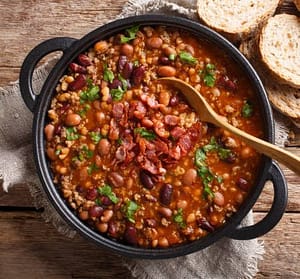
1876: Centennial Beef & Bean Stew
At America’s 100th birthday, the Industrial Revolution was in full swing. Railroads were moving cattle across the country, and the first commercial canning factories were opening. This hearty stew represents the working-class diet of the Gilded Age: filling, reliant on root vegetables, and featuring cheaper cuts of beef made tender by long, slow cooking.
- The 1876 Wallet: Economical. The rise of industrial meatpacking made beef more accessible to urban workers than ever before, though root vegetables kept the cost down.
- The Cup Pairing: Black coffee or a local pale ale.
Ingredients:
- 1 lb beef stew meat, cubed
- 2 tablespoons flour (for coating)
- 2 tablespoons lard or butter
- 1 large onion, chopped
- 3 carrots, sliced
- 3 potatoes, diced
- 1 cup dried navy beans (soaked overnight)
- 4 cups water or beef broth
- Salt and black pepper to taste
Instructions:
- Toss the beef cubes in flour, salt, and pepper.
- Melt the fat in a large pot over medium-high heat and sear the beef until browned on all sides. Remove the beef.
- Toss in the onions and cook until soft.
- Return the beef to the pot, add the soaked beans, carrots, potatoes, and pour over the water or broth.
- Bring to a boil, then reduce heat to low, cover, and simmer for 2 to 2.5 hours until the beans are tender and the beef melts in your mouth.
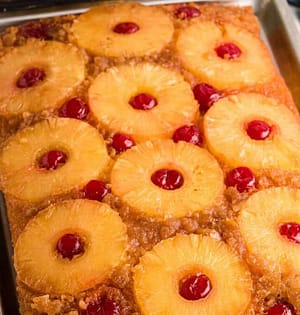
1926: The Roaring ’20s Pineapple Upside-Down Cake
The 1920s brought a boom in processed, convenient foods. In 1925, the Hawaiian Pineapple Company (Dole) held a massive recipe contest for pineapple dishes, received over 60,000 entries, and sparked an absolute craze. By 1926, the Pineapple Upside-Down Cake was the undisputed star of every modern American kitchen, thanks to the magic of the tin can.
- The 1926 Wallet: Affordable luxury. Canned goods meant exotic fruits like pineapple were no longer reserved for the ultra-wealthy.
- The Cup Pairing: Coca-Cola (from a glass bottle) or a classic gin cocktail (discreetly, of course – it was Prohibition!).
Ingredients:
- 1/4 cup butter, melted (for the pan)
- 1/2 cup packed brown sugar
- 1 can (20 oz) pineapple slices in juice (drained)
- Maraschino cherries
- 1 1/3 cups all-purpose flour
- 1 cup granulated sugar
- 1/3 cup shortening or butter, softened
- 1/2 cup milk
- 1 egg
- 1 1/2 teaspoons baking powder
Instructions:
- Heat oven to 350°F (175°C). Pour melted butter into a 9×9-inch square pan and sprinkle the brown sugar evenly over it.
- Arrange the pineapple slices on top of the sugar. Place a maraschino cherry in the center of each slice.
- In a bowl, beat the remaining ingredients together for 2 to 3 minutes until smooth. Pour the batter carefully over the pineapples.
- Bake for 40 to 45 minutes. Immediately invert the pan onto a serving platter so the pineapples are on top.
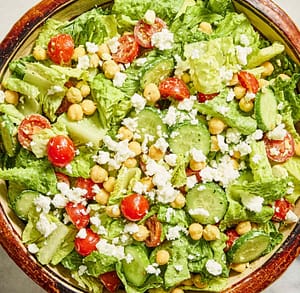
1976: Bicentennial “Green Goddess” Salad
For the 200th birthday of the nation, American food took a hard turn toward convenience, processed creations, and backyard barbecues. Jell-O molds were everywhere, but so was the newly popularized “Green Goddess” dressing, which swept the nation alongside a growing interest in fresh California-style salads.
- The 1976 Wallet: Mid-tier. Mayonnaise and sour cream were household staples, and the explosion of supermarket culture meant iceberg lettuce and fresh herbs were cheap and available year-round.
- The Cup Pairing: Tab soda, Tang, or a glass of California Chardonnay.
Ingredients:
- 1 head of Iceberg or Romaine lettuce, chopped
- 1/2 cup mayonnaise
- 1/2 cup sour cream
- 1/4 cup finely chopped fresh parsley
- 2 tablespoons chopped chives
- 1 tablespoon lemon juice
- 1 clove garlic, minced
- 2 anchovy fillets, mashed (or 1 tsp Worcestershire sauce)
- Salt and pepper to taste
Instructions:
- In a blender or food processor, combine the mayonnaise, sour cream, herbs, lemon juice, garlic, and anchovies. Blend until smooth and vibrant green.
- Season with salt and pepper to taste.
- Wash and chop your lettuce, put it in a large wooden bowl, and toss generously with the dressing right before serving.
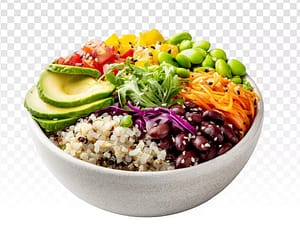
2026: The Modern Plant-Based Grain Bowl
Today, the American plate looks vastly different. Driven by sustainability, health trends, and global flavors, the quintessential meal of 2026 isn’t centered around a heavy slab of meat. Instead, it’s the customizable grain bowl – featuring plant-based proteins, ancient grains like quinoa, fresh avocado, and a rich tahini drizzle.
- The 2026 Wallet: Premium but efficient. While inflation has made fresh produce and specialty items like avocados and tahini pricier, choosing plant-based proteins like chickpeas keeps the cost per serving surprisingly manageable.
- The Cup Pairing: A cold glass of oat milk, kombucha, or an iced matcha latte.
Ingredients:
- 1 cup cooked quinoa or brown rice
- 1 can (15 oz) chickpeas, drained, rinsed, and tossed with olive oil and paprika
- 1/2 cup fresh baby spinach or kale
- 1/2 avocado, sliced
- 1/4 cup shredded carrots
- For the dressing: 2 tablespoons tahini, 1 tablespoon lemon juice, 1 tablespoon warm water, a pinch of garlic powder.
Instructions:
- If desired, roast the seasoned chickpeas at 400°F (200°C) for 20 minutes for a nice crunch, or use them straight from the can.
- Whisk the tahini, lemon juice, garlic powder, and warm water together in a small bowl until it forms a smooth, pourable sauce.
- Build your bowl: start with a base of quinoa, then arrange the chickpeas, spinach, avocado, and shredded carrots in neat sections on top.
- Drizzle the creamy tahini dressing over the whole bowl and enjoy the taste of 2026!
From Our History to Your Kitchen
Food has a funny way of bridging the centuries. While a lot has changed since 1776—from the open hearths of early America to the high-tech, plant-based kitchens of 2026 – the basic joy of gathering around a table remains the same.
Which of these historical eras are you most tempted to taste? Would you brave the open-fire cooking of a Revolutionary hoecake, or do you prefer the convenience of a modern grain bowl? Let us know in the comments below, and if you try any of these recipes at home, be sure to tag us and share how your “taste of history” turned out!
If you like what you read, please like, share, follow, and subscribe. Thank You!
Happy 250th Birthday U.S.A.!
Click the button below to join me in The Janny Bee time machine to find out what life was like in the U.S.A. from 1776 to now. Food, drink, health fads, and prices.

Please Pass It On!

Discover more from The Janny Bee
Subscribe to get the latest posts sent to your email.

I should have opened with a compliment! I liked this and appreciate delicious patriotism. Happy anniversary, may your celebrations be early Thanksgorging and leave your pants’ unbuttonable.
Do you have any articles specific to the New England Region?
Thank you so much! I really appreciate that! The article that is the closest to New England can be found here: https://thejannybee.com/2026/03/19/guardians-of-the-coast-the-enduring-story-of-lighthouses/. It is about lighthouses. The feature image is of The Highland Light in Truro, MA. I took that photo back in 2006, New England is my favorite section of the United States. I really should do more on the subject.
Sounds good. I’ll check it out. Thanks. Keep on keeping on.