


Crochet, as we know it today, is a relatively young craft compared to ancient fiber arts, but its roots stretch across continents and cultures. The exact origin is a bit of a mystery. There’s no single birthplace, but historians have traced similar techniques through several traditions.
Some believe crochet evolved from tambour embroidery, an 18th‑century technique from Asia and the Middle East where artisans used a small hook to create delicate chain stitches on fabric. When the method made its way to Europe, the fabric backing eventually disappeared, leaving only the hooked stitches behind. A transition that looks remarkably like early crochet.
Others point to traditional practices in South America, China, and Arabia, where looped and knotted textiles were made with tools that resemble modern hooks. While these methods weren’t identical to crochet, they show how many cultures were experimenting with the idea of pulling loops through loops long before the craft had a name.
Crochet truly blossomed in 19th‑century Europe, especially in Ireland. During the Irish Potato Famine, families used crochet lace – often called “Irish lace” – as a source of income. Women created intricate motifs and sold them across Europe and America. This period transformed crochet from a domestic pastime into a lifeline, and it helped spread the craft worldwide.
By the early 20th century, crochet patterns began appearing in magazines, and the craft became a staple in homes. Each era left its mark:
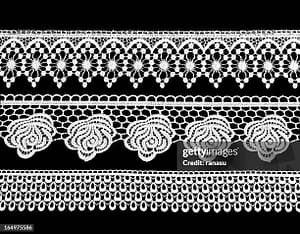
- Victorian crochet favored lace, collars, and doilies
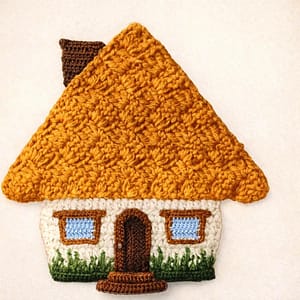
- Mid‑century crochet embraced colorful home décor and household items
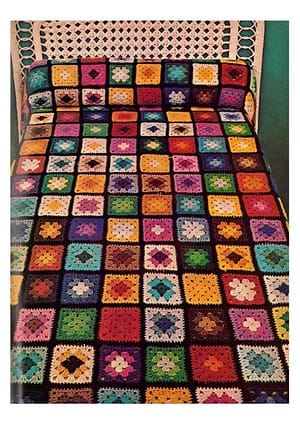
- The 1970s brought the iconic granny square boom
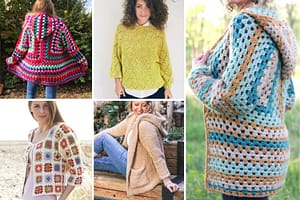
- Today, crochet is enjoying a renaissance – from fashion runways to cozy handmade blankets shared online
What hasn’t changed is the heart of it: crochet has always been a craft of connection. Hands moving in rhythm, yarn looping into something warm and useful, and skills passed down from one generation to the next.
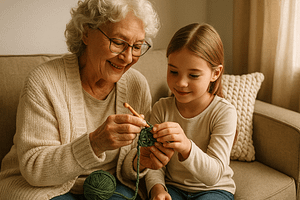
My Crochet Story
I come from a long line of crocheters on both sides of the family. My mother, grandmothers, aunts, great-aunts, and even great-great-aunts all had hooks in hand at one point or another. When I was ten, I decided I wanted to learn too.
I asked my mother to teach me, and she tried. But I just couldn’t get it. Looking back, I understand why: she started me on a circle. For most beginners, a circle is one of the hardest shapes to crochet. Besides learning a new skill, you also have to deal with increasing the number of stitches per row. Not easy!
One Sunday, my Grandma Hilt – my father’s mother – was visiting. I was chatting with her about crochet, and she spotted some yarn and a hook next to my mother’s chair. She sat me down on the couch, wrapped her arms around me so I could see exactly what she was doing, and began teaching me in straight rows of double crochet.
Now, a little backstory: my mother and her mother-in-law didn’t exactly have the smoothest relationship. So anytime Grandma Hilt had a chance to one-up my mom, she took it. There we were, just a few feet away from my mother, when Grandma Hilt declared – loudly, in her half-English, half-Brooklyn accent – “I’ll teach you how to crochet! Your mother has no patience!”
The look on my mother’s face? Not pleasant.
But long story short: I learned how to crochet that day. And I haven’t been able to put the hook and yarn down since.
I love how crochet lets you practically sculpt whatever you want. Add a few stitches here and there, and suddenly you’ve got a new shape. You can make blankets, clothes, stuffed animals, jewelry, ornaments, home accessories…if you can imagine it, you can crochet it.
You can use yarn of all types, string, thin strips of fabric, even rags. Back when plastic grocery bags were still legal and abundant, people were cutting them into strips and crocheting all sorts of clever things. Crochet is endlessly versatile.
And the best part? If you make a mistake or don’t like what you’ve made, you can just rip it all out and start again.
Do I love crochet? Yes, I do. Thank you, Grandma. And thank you, Ma – for all your help once I learned the basics.
My Personal Tips For New Crocheters
- Start with a short, straight row. Not a circle. Circles are surprisingly tricky for beginners. A simple row of stitches helps you learn tension, rhythm, and how the hook and yarn move together without the frustration of increasing and counting in the round.
- Begin learning crochet with worsted-weight acrylic yarn. Acrylic yarns like Red Heart are perfect for learning: soft but not slippery, easy to rip out if you make a mistake, and far less itchy than wool can be. They hold their shape well, which makes it easier to see your stitches.
- Work from balls of yarn, not loose skeins. Whether you buy yarn already in balls or wind your own, it makes a world of difference. Balls feed smoothly, tangle less, and keep your project from turning into a yarn wrestling match.
- Use a hook that feels comfortable in your hand. Bigger hooks (like 5.0 mm–6.5 mm) are easier for beginners because the stitches are larger and easier to see. Plus, your hands won’t cramp as quickly.
- Keep your tension loose at first. New crocheters often grip the yarn like it owes them money. Looser stitches make it easier to insert your hook and help you find your rhythm.
- Count your stitches at the end of each row. It sounds tedious, but it prevents the classic “accidental triangle scarf” problem. A quick count saves a lot of unraveling later.
- Good lighting makes a huge difference. Crochet is much easier when you can clearly see your loops. A lamp beside your chair can feel like a little crafting spotlight. When you get enough practice in, you’ll be able to crochet with your eyes closed!
- Don’t fight the yarn. Let it glide. If you’re tugging or wrestling with it, pause and reset your hands. Crochet should feel like a gentle flow, not a battle.
- Practice with light‑colored yarn. Dark yarn hides stitches, even from experienced crocheters. A soft pastel or medium shade makes learning so much easier.
- Take breaks to stretch your hands. Crochet is soothing, but your fingers and wrists appreciate a little wiggle and shake now and then.
- Give yourself permission to rip your work out without guilt. It’s called, Frogging (rip-it, rip-it). And, it’s part of the craft. Every crocheter does it. It’s not failure, it’s editing.
Where to Find Ideas and Get Started
These resources are helpful for both beginners and long‑time crocheters, especially if you’re looking for new sparks of inspiration.
Prepare to be hooked! This YouTube channel is a treasure trove for crochet enthusiasts of all levels. With an impressive 1.33 million subscribers and a staggering library of over 6,000 videos, it’s become a go-to resource in the crafting community. At the helm is the charming Michael Sellick, whose engaging teaching style and infectious enthusiasm make learning a joy. Whether you’re just picking up your first hook or you’re a seasoned pro looking for new techniques, Michael’s clear instructions and friendly demeanor will guide you through each stitch. From basic granny squares to intricate afghans, this channel offers a wealth of projects to keep your hooks busy and your creativity flowing. It’s not just a YouTube channel; it’s a vibrant community where the art of crochet comes alive!
Hooked by Robin is a wonderfully welcoming YouTube channel run by Robin, a talented crocheter who teaches with clarity, kindness, and a touch of fun. Her tutorials range from absolute‑beginner basics to beautifully textured stitches and creative projects for more experienced makers, so there’s always something new to learn no matter your skill level. With over a million subscribers and hundreds of videos, she’s known for breaking down even the trickiest techniques into simple, confidence‑boosting steps. Whether you’re looking for a quick stitch refresher, a new blanket pattern, or a charming little project to brighten your day, Hooked by Robin is a cozy, encouraging place to grow your crochet skills.
Kits That Included Everything You Need!
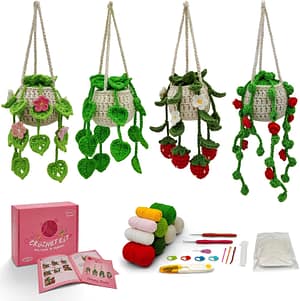
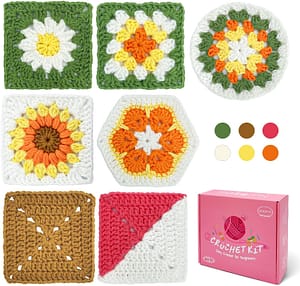
Whether you’re picking up a hook for the first time or returning to an old favorite hobby, I hope these resources and little kits help spark your next cozy project. Crochet has a way of slowing life down and adding sweetness to the everyday. Happy stitching, friends!
Disclaimer:
This post contains affiliate links. If you purchase something through these links, I may earn a small commission at no extra cost to you. Every click helps support my work, and the time I pour into creating content I love to share. Thank you so much!
If you enjoy what you see, please Like, Share, Follow, and Subscribe. I’m also working hard to qualify for the Amazon Associates program, so if something catches your eye, I’d be grateful if you’d consider purchasing through my links. I only recommend products I genuinely use and trust.
Thank you again for being part of the hive!
Please Pass It On!

Discover more from The Janny Bee
Subscribe to get the latest posts sent to your email.